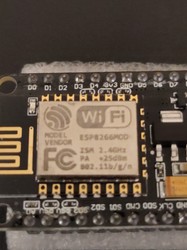
- cross-posted to:
- technology@lemmy.ml
- cross-posted to:
- technology@lemmy.ml
You must log in or # to comment.
So much of our infrastructure uses the internet now that if it goes down I wouldn’t be shocked if electric grids, healthcare, shopping, public transport, etc also shit the bed.
I got a visa gift card for Christmas I’m spending on LORA today. Western NY here. Probably gonna build some decent nodes at home and office. Will add to the map to help encourage others.
Lot of complex discussions here about Ham radio operator, new hardware or protocol like Mestastic, SDR, etc so I’d start with “just” what people already have at home and only AFTER go there, if need be.
If you have WiFi Mesh at home or IoT via ZigBee or Z-Wave you already are doing mesh networking. Sure you might not have Internet access this way but the principle is already there via your existing relative affordable infrastructure.
I’ve not been recycling my tin cans and I have a whole shitload of string. Happy to share.
I’ll take 3 bags full. One for the master (coordinator) and one for the slave (endpoints), and one for the little girl who lives down the lane (Fitgirl Repacks)
My remembering of that line is “and one for the dame”, and I grew up in the deep south…strange
If this is something I can setup with no need of complex licenses, it would be interesting.
I live in a small town and it could prove as a useful city project for cheap, reliant, local communications.
setup with no need of complex licenses, it would be interesting
It doesn’t seem like you need any licensing, it’s like a walkie talkie.
it could prove as a useful city project for cheap, reliant, local communications
I’m not sure if that’s the right usecase. Meshtastic seems to be for short-range, line-of-sight-ish communication. Apparently, you can set up repeaters to expand the coverage area, but it seems like buildings, trees, etc will dramatically affect the signal strength. (I think?)
I’m fairly certain that this requires a Ham radio operator’s license (in the USA at least). It uses frequencies that are regulated.
Licensed amateur radio operator here in the US. Meshtastic does not require an amateur radio license.
Nope, it specifically uses free frequencies. The same ones that are used by RC hobbyists and RF based remotes
I don’t actually own a Meshtastic device… but I did blow off work to do a little browsing and found this:
Meshtastic does not require any license and is open for anyone to use.
Meshtastic does not require a HAM radio license to operate
don’t need an amateur radio license for the low-power bands used by Meshtastic
Huh? Can anyone explain what all these words mean? Mesh? Ham radio? How does this work is it like toy walkie talkie?
They’re a mesh walkie-talkie, but you don’t need to walkie or talkie 😁
Meshnet means that if A can see B and B can see C, then A can message C, it’s routed through B automatically.
Also it’s text only, not enough bandwidth for speech
Isn’t this just like the internet though?
That’s the point, but it doesn’t require an ISP
So it’s like a pager?
When I think of pagers I think of receiving only, not sending. Meshtastic devices can typically do both.
Kind of. But it is my understanding that pagers work with centralised transmitters/stations. I am no expert though, so maybe there is mesh-like pager protocols.
This is decentralised, a mesh. Routing is done through the terminals themselves, rather than through a centralised transmitter.
walkie talkie
Yeah, I think so. I saw a video where someone called it “a walkie talkie, but for sending text messages”. People use these for going on remote hikes, hunting trips, or protests. Basically, any area where you can’t use a cellphone. They’re not a replacement for cellphones, they fill a different usecase.
Is there a map that shows where are using them? It looks like a fun idea, but I don’t want to get something and no one is using it in my region. (Outback Australia)
Being shown in maps like this is opt-in, so there’s an unknown amount of users which are not displayed.
I’m 100% OK with it being opt-in. If there is at least 1 in my state, I’ll bite.
Welp, I guess I’m biting…
One in your state? Wouldn’t you need one in your line of sight?
Yup, same thoughts here (Norway). I doubt anyone near me uses it.
You’d be surprised.
In NSW Australia there are hardly any two near each other. What is the point of all these people even buying one if you don’t team up with at least one neighbour?
Be the change 😎
It is delusional to think the chances are good of a neighbor just looking up the map and joining in. Geeks need to talk to people in real life, especially in their neighborhood. Team up with at least one other person. Use word of mouth. That is effective change.
Unfortunately I live in a remote area with non-tech people who are not conservative enough to be preppers. I will still run it past them though.
I’d talk to you if you were on the map 👍
Meshtastic sounds great in concept but IMO it’s useless in most parts of the world due to it’s extreme low power.
If all your neighbours have one or there aren’t many buidings around blocking line of sight then meshtastic has great potential. Otherwise I would stuck be sending messages to myself.
Now, they made boards with more power that operated and crossed at several different frequency bands, specially shortwave, then meshtastic would be an incredibility powerful too. However illegal.
Now, they made boards with more power that operated and crossed at several different frequency bands, specially shortwave, then meshtastic would be an incredibility powerful too. However illegal.
Sounds like you should look into getting an amateur radio license!
Also, power isn’t really the issue. Power only helps you while sending, not while receiving. What you want is a good antenna which helps with both sending and receiving. For example, if you’re somewhere remote but you know there’s a city in a specific direction you could get a directional antenna like a yagi and point it that way.
I will never get a ham license, one day I will get a 100W out of band CB rig, but as a matter of principle I will never become a ham.
There are several reasons for it, reason number one is privacy, I would never say my legal name to strangers on the internet, for obvious safety reasons, why should I have to identify with a callsign when chatting over radio?
Reason number two is that you can lose your license just for “swearing”? Like what the fuckl? What censorship is this?
Reason number three, it’s illegal to use encryption on ham bands, so I can’t even have a private conversation over ham radio.
Reason number four, I understand that licensed hams don’t want unlicensed noobs jamming their frequencies, I understand the need to reserve some of the spectrum to people who actually understand that just because you can’t hear anything, doesn’t mean you’re not jamming, but there should be parts of the radio spectrum reserved for free personal use. Reduce ham bands by half for all that I care, but I should be able to just buy a radio and transmit how many watts I need on those free bands without needing authorization from the government.
Antennas and location.
I can see one node on top of the tallest building around here and it allows me to connect to nodes 20-30km away.
The map does not say if a node is high unfortunately.
They list the elevation.
Even if this is a very specific setup, I still think Meshstatic could be used as an external internet pretty much anywhere if there are enough nodes scattered around. Could be like a LAN network. Also, probably would be used by bad actors too.
used as an external internet
It seems to send messages p2p, not provide broad web access.
Everything gets used by bad actors. Internet, cars, roads, kitchen knives, bicycles, hoodies, … You still use these because they’re handy and useful. If criminal acitivity means to not use things, we’d use very little. I wouldn’t think too much about it.
I love Meshtastic. Had a nice convo with a stranger last night while I was LoRa wardriving to test out the range of my new rooftop antenna on my house.
I’ll say what I just said on a similar thread: if the internet goes down tomorrow, mesh will mean very little compared to ham radio.
Any quality transceiver built in the last 100 years will be more useful. It is purely about how many exist, how long they last, and their requirements for use (which are effectively, power and antenna).
Yes, there is a license that you need in non-emergency situations. It doesn’t change much anything in emergency situations, and it certainly doesn’t affect the fact that there are already millions of radios out there.
I certainly wouldn’t throw away a mesh if the world was ending – I’d set it on the desk while finding contacts on HF (=world band) using a ham radio. My chances of contact there are at least an order of magnitude better.
FYI if you’re ham licensed, you can boost the output power of your mesh radio. There’s a setting in most firmwares.
If I recall correctly, you can, but it removes your node from the public networks everyone else is using because hams cannot use encryption for coms as part of the rules for ham operation, as the non ham network is encrypted by default. You would have to build a secondary network independent of the public node list.
Correct me if I’m wrong. But that was my understanding of the difference.
You’re probably right. I noticed the feature, but haven’t personally tried it.
I’ve come to the realization that mesh nodes are little more than a gateway drug into the world of ham radio. And for that I’m grateful.
It’s not as good, and does everything worse than radio. The only real world use I have found is for when cellphone networks get overwhelmed at things like music festivals and large sports games. No one else’s texts go through, but I can toss by buds a node to put in their back pocket and we can stay in touch.
our local mature club is building our local mesh network out now as an introduction to the ham world. And it’s working. It’s getting the younger kids and adults through the door. And from there, it’s an easy thing to get them interested in more useful and fun forms of communication.
I bring FRS radios (normal ol’ walkie talkies) to the local Renaissance festival which has awful to no cell reception. It works great.
But yeah the barrier to even getting a technician license is too high. You get people that get excited and wanna do stuff and then they’re told they can’t. So things like meshtastic where they actually can do radio related things without a license are great.
I like the idea of a ham radio, but too voice shy to actually talk lol, so I don’t bother with it.
FT8 is fun and doesn’t require talking. CW too but you need to learn Morse code.
JS8Call and FT8 are digital modes that don’t require talking. Plenty of other things to do as well
Now let me introduce you to APRS 😁
It’s pretty much the HAM equivalent of Meshtastic
Now that I like. And I think there is room for both – IF people know and understand the differences.
Mesh against ham in an emergency is not even a competition, in my view. The numbers just aren’t there. But for random cellular failures etc, I see some utility.
Personally, I’ve just seen so much more about mesh lately than ham, and it makes me sad. If it’s a gateway, as you suggest, then great. I worry that people see it as a novelty and not a gateway.
There was a massive power outage in Portugal not too long ago and people used Meshtastic to communicate between cities to see who had power.
It does work, but it’s not a Final Solution
I expect they also used ham. It’s just a numbers game. Mesh doesn’t have them in comparison.
Oh it’s a hundred percent just the novelty communication technology that is in vogue right now. I don’t really know if it’s a true zeitgeist technology or if someone with a lot of product to sell who is playing with the social media algorithm. But I guess I don’t really care much.
The trick is to find a way to seize on that opportunity. Now that our mesh network is structurally sound and sufficient, I’m working on using a raspberry pi to automate our ham club meeting dates, testing dates, and field days, and then blast those messages once a week or so over the mesh network. That way, an impulse buy turns into the discovery of a fuctional network and afterwards, a random person can discover a whole local community of people with all sorts of new things to learn.
You can lead a horse to water. But you can’t make him drink.
first you need a trough. That’s the mesh network. After, the horse needs to be thirsty. That’s the curiosity people have. information, the when and how and where, you can automate and passively tell them about. that’s the water.
Good on you for using one to bolster the other! Smart use of the tech either way.
I’ve been fooling around with Meshtastic for a couple years and haven’t come up with a real world use for it yet, other than scenarios like you mentioned.
What would be really cool is if cell phone makers could incorporate a mesh into their phones as a local public channel when the tower goes out. It would probably just be used by drug dealers or something, but it’s the only cool and functional idea I can come up with.
Controlling home automation remotely without any internet access.
Tracking dogs, people or vehicles - again with no internet.
If they can’t charge an admittance fee or a per message fee, they won’t implement it. It goes against their business model.
But we can dream.
Here meshtastic has become part of the emergency information network initiative. If there is a coms blackout, intercity/town civillian communications are to be handled by amateur radio enthusiast with licence and communications whitin the city/town will be handled by licence free systems. Meshtastic has been spreading well among the general public, so it has become most viable system to use at lowest level in the chain.
But it just isn’t. Why not put those resources towards ham, where there are considerably more handsets already there?
This seems like a solution in search of a problem thay was already solved, hidden by people who don’t want a $10 license.
You get shitloads more people to buy a cheap gadget that’s easy carry with you.
If you start talking about ham radios and licences, most people loose interest before you finish the sentence.
The HAM license isn’t a trivial checkbox test, at least not over here
I’d love to know where a ham test is difficult.
What time zone?
CET, it’s in the title
Every year I see more on the map. Have a solar node, good fun.
Ever useful? I doubt it, HAM would dominate in a collapse.
In a true emergency? Yes, HAM is the way to go and I need to get around to buying one of those super sketchy Baofengs. In theory you can configure them to use without a license (which is also on the todo list) but it is super easy to tick into the licensed use. How much people will care will mostly depend on whether your local HAM folk are narcs. But, regardless, all bets are off in a true emergency and Baofengs are dirt cheap.
But in a “the internet is out” situation? Or even a “please evacuate in a calm and orderly fashion” for a wildfire or a bad hurricane? That is where meshtastic (et al) shine and it is well worth convincing friends to pick up a t-deck or whatever. Excellent for the “is it out for everyone or just me?” checks. Also useful for letting people know which field can see a cell tower a county or two over for emergency communication or to even coordinate whether you are all gonna head North or South to hang out for (hopefully just) a few days.
And anyone thinking of using any of that for stuff the government don’t want you to: You are an idiot and you need to learn about how insecure all of those are.
Get a TIDRADIO TD-H3 instead of a Baofeng. Essentially the same price but a nicer feature set.
Also, be sure to get the GMRS one. They’re all the same and can be reset to any mode, but the way the law with FRS/GMRS works is technically the part itself (the radio) needs to be certified.
It’s very important that you do not reset it and use it improperly. I would never do such a thing and I suggest you don’t either.
Ham radio played a massive role while the Internet was out following hurricane Helene. https://youtu.be/w8hSHq8dGsA
Keep in mind that without working repeaters, the baofeng will only have a range of a few miles on level ground with nothing in the way. If the power goes out, most of the repeaters will go down too. Some have battery backups that may last a few hours to a few days. Depending on where you are, a few may be solar powered, but heavy use will drain the batteries. Some repeaters are also reliant on the internet for linking to increase the coverage area.
What you really want in that case is a portable HF radio and a wire antenna you can string up over a tree branch or a support with a fishing pole. In the daytime, you can use the upper HF bands for long distance communication. That has a range of thousands of miles, but nearby stations won’t be able to hear you if they are beyond line of sight. Since the portable radio doesn’t have much power, you may need to use digital modes to get through. For more local contacts you can use NVIS propagation on the lower HF bands. That has a range of several hundred miles and can even be used to talk to someone on the other side of a mountain. Even 5 watts and an antenna strung 3 feet off the ground can work for voice contacts out to over a hundred miles.
I’d be interested in reading a debate thread on Lemmy about this.
What the pros and cons to different communication methods are following a disaster that neutralizes mainstream methods of communication.
Benn Jordan just did a video on Meshtastic and other decentralized tech, so I’m inclined to believe in mesh technology. But I’m also curious about the high frequency stuff you mention
Since the portable radio doesn’t have much power, you may need to use digital modes to get through.
I don’t know much about radio stuff, but ever since I learned about LoRA I’ve wondered what kind of range a station could get if the longwave or AM bands were repurposed for use with a spread spectrum digital protocol. And what kind of bandwidth something like that would have.
I think being able to do datacasting over really long ranges would be useful, so, for example, you could send emergency alerts to people even if the local cell infrastructure was down. But with the way things are headed I guess that role will be taken up by satellites.
For LF and MF, you typically want narrow signals, not spread spectrum. It’s hard to make wide band antennas for such low frequencies and propagation can change a lot in just a few tens of kHz.
I see
In your opinion is there anything useful we can do with that part of the radio spectrum as those stations switch off, or are those frequencies going to be silent in the future? Will they be turned over to hobbyists maybe? (or would the power requirements be too high at those frequencies?)
The four repeaters in my area are run by one club. They do the Field Day exercise every year and from what I remember they run them around 150w per repeater. A small jenny could run those fuckers on 15gal a day fairly easily. In a huge emergency, though, you can relay morse on just 5w through 5 or less relaying techs to most of the world without repeaters at all. (1 if you’re lucky, but I’m being fair to real life interference).
Yeah… if I am trying to reach people tens of miles away during The Apocalypse, I am already dead.
Anyone who is within range to be helpful (or… not) would generally be within signal range of a handheld.
What about after surviving the initial disaster? During the rebuilding? Or the ongoing survival?
Long-distance radios are useful as hell in stuff like The Last of Us.
That’s not an emergency scenario, that’s an apocalyptic scenario.
True, you make a good point.
I did know I was referring to an apocalyptic scenario rather than an emergency one. The giveaway was that I was replying to this comment:
Yeah… if I am trying to reach people tens of miles away during The Apocalypse, I am already dead.
🙂
If you are in a situation where you need help, the odds of someone (even the person you have been talking to for weeks on the radio) doing a day or two journey to MAYBE be able to reach you is pretty slim. And such long distance communication has other implications for bad actors.
And in the event of “rebuilding” some kind of community, you aren’t going to be using a handheld device at all. You’ll raid… I don’t even know what at this point (I miss Radio Shack) to install a radio on the tallest building you can find. Oh, a HAM Radio Nerd’s house. That’ll work.
Whereas if you are trying to communicat4e with others and signal for rescue? Whatever you can get from walking up a hill/mountain or climbing the stairs to said tall building with your handheld is probably about what you can expect.
Same with in stuff like hurricanes and the like. If you are in a region that is at all hospitable then the relief teams know to send helicopters/people to that area. And if you are in the kind of situation where even a few hours might mean the difference between life and death… odds are nobody is coming.
HF handhelds do exist. Do they have the range of a dedicated HF rig? No. Better than a Baofeng? Yes, and they’re about $10 more.
Like what? Can you name one?
No wonder they’re insecure with you calling them idiots all the time.
🫣
You just can’t legally transmit without a license. You can own a ham radio and listen all you want.
Perhaps where you live.
Internet 101: Laws aren’t the same everywhere.
Edit: My point wasn’t specifically about amateur radio (I’m also one) nor where I live, but about the old-as-the-internet habit of people scoffing about what is and isn’t legal without even knowing where the person they’re replying to lives.
On the radio front, numerous countries require licences to legally listen to public broadcast radio (Switzerland, Slovenia and Montenegro are examples). If your handy dandy Baofeng UV5 can pick up broadcast FM radio frequencies, in such countries it will fall under licencing requirements even if you never transmit.
Out of curiosity: where do you live where listening on ham requires a license?
In the US and other countries I am aware of, listening is allowed without a license (how would one even enforce such a thing?). In fact, you can even transmit on a ham radio in the US without a license provided there is an immediate risk to life or property.
What if the “laws aren’t the same” remark was about “you can’t transmit without a permit”? Not about the “you need license to listen”?
Could be. I expect the commenter would clarify.
Early evening in the western hemisphere, OP posted a large sum of perfectly native fluency English, so yeah, I’ll assume US or Canada. Can’t have a conversation without making reasonable assumptions. But please, feel free to add to the conversation, where do some of these exceptions exist? Don’t just “um, actually” the conversation, add to it!
yes they are
You legally need a license for HAM in the US, but there’s nothing really preventing anyone from configuring a radio to licensed frequencies. As for HAMs reporting you, if it’s an emergency the FCC rarely fines anyone if it’s for medical or safety concerns, were any amateurs to even report you. The whole reason for the Tech license for example is just to know laws and rules for operation. It’s damn easy, too. License exam was $25 a few years back, 8 year term. All the questions and answers are avilable online, they just pull (35? I think) from the pool of 400. Most is pretty basic rules of common sense and civility, a few laws. Most tech questions are just converting frequencies and basic math. They don’t require morse anymore (Thank god, or I’d never pass). And if you pass the Tech, you can go right back in for free to try the next exam level. I never use mine, but I do have an HT I keep charged in case of emergencies.
I think many people are unaware that you don’t need Morse anymore tbh. This makes the license extremely easy to get, but the knowledge you can get from ham radio is off the charts.
FYI, it’s not HAM (not an acronym)-- just ham. Named because the people fucking around with radios were “hamming it up”, back in the day.
They dropped the morse requirement because people just stopped taking the test
Which “people”?
What about more extreme cases, say Castaway (movie) type situation. Stranded on an island in middle of nowhere.
But conveniently, one of the packages has a functional 2m battery powered radio and a Yagi too. There’s no one you can make contact with, except… the ISS.
What if the ISS was the only station you could contact?
“Hello International Space Station, I am stranded on an island after a plane crash. Can you help?”Without a way of knowing which satellite passing overhead was the ISS, in the narrow windows each day where you could see them well enough to correctly point a Yagi at one, you’d quickly run out of battery before making a relevant contact. Also the people on the ISS rarely listen or respond, the most used ham equipment on the ISS is basically a glorified repeater so you’d also have to get above the pileup of all the satellite chasers just trying to log contacts.
One of the coolest things in my opinion about radio is the ability to skip off the upper atmosphere and bounce a signal back down halfway across the globe. You can also bounce a signal off the moon.
2m doesn’t bounce off the atmosphere. You really need 10m for that. 6m in the mist perfect ideal scenarios but it’s still very rare (and in this scenario you aren’t gonna know when). EME (the moon stuff) is also pretty tricky and requires a lot of power because of how messed up the signals get in the process.
I’ve been thinking about ordering some but I’m getting some analysis paralysis just looking through the options, any recommendations on a cheap unit I can hand out to some friends, I dunno if I truly need solar, but I guess it’s not a bad option
They sell 2 helteks so you can play around with them for about 50$. Used to be around 30. I have a couple, they do decently well.
Licensing means nothing in an emergency situation. I never understand why it is even mentioned in these arguments. In fact, even if the world isn’t ending, you can ALWAYS use a ham radio in an emergency with or without a license (defined by the FCC as immediate dangers to life or property).
More importantly, there are at least an order of magnitude more ham radios out there than mesh devices. It isn’t even close. If the world ends, find a ham radio. Ideally you will know what to do with it when the time comes.
I wish this energy was just put towards promoting ham, tbh.
If you don’t know how to use a radio or set it up before the emergency then it’s useless. You need to be ready before. And part of getting ready and learning is being licensed.
Maybe you’d understand more things if you continued to read after the first opportunity you see to spew whatever you want to?
But in a “the internet is out” situation? Or even a “please evacuate in a calm and orderly fashion” for a wildfire or a bad hurricane? That is where meshtastic (et al) shine and it is well worth convincing friends to pick up a t-deck or whatever. Excellent for the “is it out for everyone or just me?” checks. Also useful for letting people know which field can see a cell tower a county or two over for emergency communication or to even coordinate whether you are all gonna head North or South to hang out for (hopefully just) a few days.
I’ll also add on that it is useful to be able to practice and get familiar with a tool without risking a fine.
I wish this energy was just put towards promoting ham, tbh.
I wish you put more energy towards reading the comments you are replying to
But in a “the internet is out” situation? Or even a “please evacuate in a calm and orderly fashion” for a wildfire or a bad hurricane? That is where meshtastic (et al) shine and it is well worth convincing friends to pick up a t-deck or whatever. Excellent for the “is it out for everyone or just me?” checks. Also useful for letting people know which field can see a cell tower a county or two over for emergency communication or to even coordinate whether you are all gonna head North or South to hang out for (hopefully just) a few days.
Disagree. Ham is better here, for the reasons I already mentioned.
I’ll also add on that it is useful to be able to practice and get familiar with a tool without risking a fine.
You don’t risk a fine if you get the license first. The test is not difficult and costs something like $10.
I wish you put more energy towards reading the comments you are replying to
I put in the appropriate amount of energy for the quality of the comment (and the rudeness of the response – be better).
Got it. Nobody should consider the need for a license because, in an emergency, you don’t need one. But also get a license so that you can use it in non-emergencies otherwise you’ll get a fine.
Good talk.
I guess here the topic is more of insurrections, like what’s happening in Iran right now or how it went on in HK
How fast could a group of 5 people that want to remove all nodes in the area need to do so? Are they all listed on a map with their location?
Mine is on a map, but in a radius of around 10 miles. Close enough to let people know I’m here, but not accurate enough to easily track me down.
That said, if someone wanted to hunt me down, they certainly could triangulate me pretty quickly.
Yeah all they would need is a small RTLSDR and they make them directional for police and such. Its how they get people interfering with police/fire/etc…etc… on different channels. At 1W or lower its going to be a bit hard to find, but anyone determined would be able to triangulate pretty quick.
Is it meshtastic? I’m pleasantly surprised by how much it’s grown around me in just a year
It’s cool yes. But my wonder is if it will be on anyone’s mind when things go south.
In a lawless world, could you trust anyone that said hello back?
I think the point is to keep in contact with friends and family. Maybe it would be used to blast news or alerts in a time of war idk yet, I just ordered some radios a few days ago and I am waiting to get started with it.
Yeah I’m thinking for flooding and generalized chaos but not a direct emergency.
No idea about an appocalypse situation, I don’t have solar so all my gadgets are going down anyway. And not that many solar nodes around me
HAM will work best for long distance communication but does not have enough capacity to support local short messaging for any major population sizes. Mesh networks scale in bandwidth and will not be overwhelmed as easily if tens of thousands of people suddenly hop on it at the same time.
I think that Starlink covers a lot of disaster scenarios.
Assuming Elon isn’t part of it or doesn’t restrict usage
Free Starlink during disasters for everyone, but for
surveilencechild protection and anti-terrorism you must accept X as a Certificate Authority.Starlink and the number of satellites we’ve got up there could absolutely cause a chain reaction if a few too many were destroyed.
Haha I didn’t mean that kind of disaster. But yes star link has the potential to wipe out a lot of LEO until the debris orbits all decay
Yep its a fun hobby though!
I never could really get ahold of anyone to talk to, most Elmers in my area died. So I just use the license as an emergency line. Talked a few times on my HT, but most HAMs in my area use their cell phones nowadays.
how do i make it go?
Check out the Quickstart: https://rootaccess.org/wiki/Meshtastic/
There are others but this is from a local makerspace and I have personally done this setup. It works well, as long as there is a node in a high place.
Honestly though its a hobby not something that can be relied on unless your whole community gets together. Hope you have fun!
thanks amigo
I’m really hoping this takes off.
Same, decentralized mesh networks would be the equivalent of a “federated internet”. No one person owning the infrastructure.
If this were to become mainstream the mesh would become the “Internet”, with enough nodes, pcs and servers.
And in the meantime where one mesh does not “connect” to another, traffic could be routed through the “old internet” by one or more exit nodes connected to the “old internet”.
Isn’t meshtastic exceptionally low bandwidth?
I’m just here to cheer on a Jitsi link in the wild.
Go Jitsi!
For others who (like me) never heard of this before:
Jitsi is a set of open-source projects that allows you to easily build and deploy secure video conferencing solutions. At the heart of Jitsi are Jitsi Videobridge and Jitsi Meet, which let you have conferences on the internet, while other projects in the community enable other features such as audio, dial-in, recording, and simulcasting.
What timezone, OP?
Jitsi link: https://meet.jit.si/whatiftheinternetgoesdown
CET
deleted by creator