

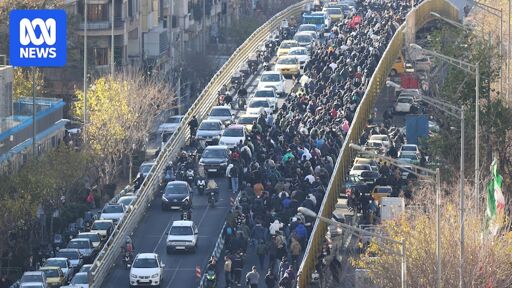
…
Merchants from Iran’s bazaars played a key role in the 1979 Islamic Revolution, which brought Iran’s clerics to power.
Now they may have started a movement to depose those rulers because many of the protesters want more than economic relief.
Some told the ABC they were angry about extensive corruption and decades of mismanagement and wanted an entirely new system of government.
“This anger comes from the sense that the country has been abandoned, as if no-one intends to stop the collapse, the instability, or the soaring prices,” Babak* (not their real name) told the ABC.
…
I wish the protesters safety and success. Iran has been a central pivot in world civilization since its dawn, and it rightfully belongs back there as a center of culture and civilization, run by a government chosen by the people and accountable to the people.
They’re about to run out of drinking water and might even have to evacuate Teheran because of it.
While the surrounding countries invested in their water supplies and won’t be affected anywhere as badly by the drying conditions, the Iranian government spent all its resources in their nuclear and missile programs and just hoped that the decades long trend in reducing rainfall would reverse. It didn’t.
They won’t be able to ignore it any further when people start dying. But it will be too late by then.
the Iranian government spent all its resources in their nuclear and missile programs and just hoped that the decade long tend in reducing rainfall would reverse. It didn’t.
They definitely mismanaged the crisis, but this is a false dichotomy. In the past few decades Iran has been investing into its water infrastructure; it’s just that their investment priorities weren’t “make sure Iran will be habitable by 2050.” This is corruption and lack of political will, not a lack of funds.
While the surrounding countries invested in their water supplies
Curiously, the investment probably needed to be in more advanced anti-aircraft defenses.
The war lasted 12 days. The environmental impact on Iran may last decades
Damage to energy infrastructure can also have knock-on effects by disrupting water treatment and delivery systems, Weir said.
Attacking infrastructure that affects the survival of a population is prohibited under the Geneva convention. “There are rules of engagement,” said Ahmad Rafay Alam, an environmental lawyer and activist. “You’re supposed to target military installations and other parties in the armed conflict. You’re supposed to avoid civilians. You’re supposed to avoid excessive use of force, and you’re supposed to avoid targeting civilian infrastructure or infrastructure that can impact civilian populations.”
Disruption of Iran’s energy grid, bombardments shattering pipe networks, and the decades-long sanctions prohibiting the country’s ability to import supplies for repairs (cement alone has seen double-digit price spikes for years), have undermined the country’s capacity for storing and pumping potable water since the '79 Revolution.
They won’t be able to ignore it any further when people start dying.
People have already died and they’ll continue to die. This is a nation fully under siege by its neighbors and its foreign adversaries. Absent intervention by an opposition government, we’ll see Iran’s population accelerated into the same crises created in Palestine, Afghanistan, Yemen, and Pakistan.
I was cheering for the “New Iran” movement about 5 years ago, and I’ll cheer for these protesters today.
The Iranian people deserve self-determination, freedom from an oppressive government, and the sovereignty to elect their own officials in a new form of government. The world will be a better place when they have it.
Let Iran become the cultural hub that it once was.
which wouldnt have happened if the usa hadnt back the SHAH, instead of the rightful governement that was elected.
