This is, genuinely, the difference between what’s happening in America today, and what happened in Nazi Germany.
There is, absolutely and without question, a fascist takeover of the US government in progress. But unlike what happened in Germany, that takeover is not popular. The fact that ICE have to hide their faces - the fact that they’re ashamed or afraid to be known for what they’re doing - is huge.
While there were obviously many Germans who did resist the Nazis, on the whole the party was immensely popular. They were tapping into feelings that were borne - or at least accepted - by most of the populace.
There’s a great recent video by American historian Heather Cox Richardson where she and Joanne Freeman talk about how this is basically the last chance for Trump’s admin to truly seize power. That’s terrifying - because they really might do it - but it also reflects a very real opportunity. They can be stopped, and the tide is very rapidly turning against them. Renee Good’s murder, in particular, has galvanized the country against ICE, and by extension Trump. It sucks that it took the murder of a white woman for Americans to give a shit, but they are giving a shit and that’s what matters for now.
Trump’s goons are scared. That should tell every decent American that now is truly the time to push back harder than you ever have before.
Authoritarians always crack down harder when they’re losing their grip. That’s what we’re seeing now. Keep your feet on their necks, get out there, organize, vote, and we will win this!
A lot of people are going to get upset at you for including “vote” here, but you’re absolutely correct, and those people really need to understand that these are not mutually exclusive imperatives.
I will agree that defeatism is always appealing, because if nothing can be done then then you’re no longer obligated to do anything. Expecting the worst is easier than fearing it, because without the chance of success you remove the dreadful element of the unknown.
But with that said, I’d be hesitant to apply any of that to people who resist the idea of voting as a means for change. Many of them are actively seeking change, they just feel that it’s wrong to even include voting in the conversation. And they’re absolutely correct when they say that voting alone will never ever be the answer. That’s an accurate and valid assessment. What I’m disagreeing with is solely the notion, which tends to spin out of that position, that we shouldn’t even talk about voting. Voting matters, but it’s only one tool in a toolkit. If all you have is voting then you’re trying to solve everything with a hammer. But by the same token, you’d be an idiot to throw away your hammer just because you own fifteen other tools.
Wasn’t the height of Nazi popularity (at least vote wise) something like 30%? They got a plurality of the vote and steamrolled from there because of how the Wiemar Republic system worked but they weren’t the majority, at least until it was actively detrimental to not be part of the party.
If that’s some remnant of Clean Wehrmacht or similar mythology bouncing around in my head I apologize.
It’s also just a very different environment. It was very cumbersome to take a picture in the 1930s. Now we have movie theater quality video with stereo audio disseminated worldwide within minutes of a thing happening, if it’s not live.
IIRC, Trump received votes from about 1/3 of the voting populace including those eligible and didn’t bother to cast a vote
From what I remember in US History, about 1/3 of the populace wanted a revolution, 1/3 wanted to remain loyal to the king, and 1/3 didn’t care. We are currently around that territory with Trump.
Wasn’t the height of Nazi popularity (at least vote wise) something like 30%?
Keep in mind we’re talking about a political system where coalition governments are far more common. It’s not the two party system the US is used to, so votes aren’t a measure of “popularity” per se. What I mean by that is you can have plenty of people who don’t vote for a party, simply because there’s another choice they like better out of the fairly wide array of options, but that doesn’t mean they actively dislike every option they didn’t vote for just that it wasn’t their first choice. On top of that, the Nazis were very smart about putting in place policies that improved the lives of average working Germans (you know, the ones they liked), and they made sure to start out by targeting the minority groups that people least liked, or cared about, before taking their crackdowns wider.
This has been one of Trump’s major misplays. They went in with their immigration crackdown, which should have slotted neatly into that same zone of “Going after the minority groups people least liked” but in order to hit Trump’s outlandish target numbers they had to start rounding up the immigrants that everyone actually likes. Turns out for the most part Americans actually really like Abdul who runs the corner shop and gives them extra meat on their delhi sandwich, and they really like Eduardo who does their landscaping and is always on time and super polite, and the immigrants they hate are mostly just fictions made up by Fox News. Whereas Jewish people in Nazi Germany really were pretty actively disliked by a very broad swathe of the populace (the roots of European antisemitism go back millennia), so there was a lot less resistance to the concept as a whole.
It was very cumbersome to take a picture in the 1930s.
Yes, but you’re also not travelling as far from your home neighbourhood to do your job as any kind of cop or government agent. So a lot of the people around you are going to recognise you that evening at the bar or grocery store. People generally moved in smaller circles.
German fascists rise to power was also not as popular as the Nazis would have you believe. They did plenty of ginning up of the historical record.
Prior to reforming the SA into the Gestapo and using them to crack down on socialism/communism/labour solidarity the Nazis were in a tenuous position. They held the levers of power and they won some elections, but so did the Republicans
Did you think that the Gestapo would have permitted random people to take their pictures and run away?
The ability to spread images and video online nearly instantly has changed the dynamics somewhat.
I assume that almost everyone that would do such a “job”, has a certain underlying political agenda. Or at least, plain hatred for everything that is but him.
So why would i hide? Unless I know I’m kinda wrong, or even ashamed.


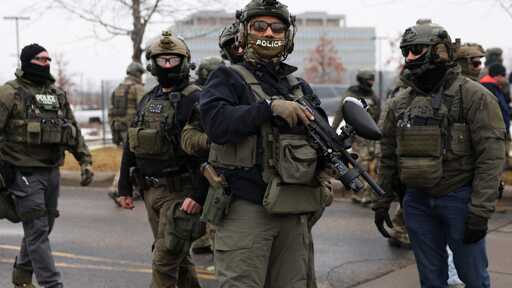
Back in the day the Gestapo were not scared to show their faces. Where is ICE’s american white pride? /s
OK, but in all seriousness…
This is, genuinely, the difference between what’s happening in America today, and what happened in Nazi Germany.
There is, absolutely and without question, a fascist takeover of the US government in progress. But unlike what happened in Germany, that takeover is not popular. The fact that ICE have to hide their faces - the fact that they’re ashamed or afraid to be known for what they’re doing - is huge.
While there were obviously many Germans who did resist the Nazis, on the whole the party was immensely popular. They were tapping into feelings that were borne - or at least accepted - by most of the populace.
There’s a great recent video by American historian Heather Cox Richardson where she and Joanne Freeman talk about how this is basically the last chance for Trump’s admin to truly seize power. That’s terrifying - because they really might do it - but it also reflects a very real opportunity. They can be stopped, and the tide is very rapidly turning against them. Renee Good’s murder, in particular, has galvanized the country against ICE, and by extension Trump. It sucks that it took the murder of a white woman for Americans to give a shit, but they are giving a shit and that’s what matters for now.
Trump’s goons are scared. That should tell every decent American that now is truly the time to push back harder than you ever have before.
Authoritarians always crack down harder when they’re losing their grip. That’s what we’re seeing now. Keep your feet on their necks, get out there, organize, vote, and we will win this!
A lot of people are going to get upset at you for including “vote” here, but you’re absolutely correct, and those people really need to understand that these are not mutually exclusive imperatives.
That’s because they have a doom kink, are addicted to losing, and desperately want to surrender the issue before it’s even come up.
I will agree that defeatism is always appealing, because if nothing can be done then then you’re no longer obligated to do anything. Expecting the worst is easier than fearing it, because without the chance of success you remove the dreadful element of the unknown.
But with that said, I’d be hesitant to apply any of that to people who resist the idea of voting as a means for change. Many of them are actively seeking change, they just feel that it’s wrong to even include voting in the conversation. And they’re absolutely correct when they say that voting alone will never ever be the answer. That’s an accurate and valid assessment. What I’m disagreeing with is solely the notion, which tends to spin out of that position, that we shouldn’t even talk about voting. Voting matters, but it’s only one tool in a toolkit. If all you have is voting then you’re trying to solve everything with a hammer. But by the same token, you’d be an idiot to throw away your hammer just because you own fifteen other tools.
Wasn’t the height of Nazi popularity (at least vote wise) something like 30%? They got a plurality of the vote and steamrolled from there because of how the Wiemar Republic system worked but they weren’t the majority, at least until it was actively detrimental to not be part of the party.
If that’s some remnant of Clean Wehrmacht or similar mythology bouncing around in my head I apologize.
It’s also just a very different environment. It was very cumbersome to take a picture in the 1930s. Now we have movie theater quality video with stereo audio disseminated worldwide within minutes of a thing happening, if it’s not live.
30% is still a lot
IIRC, Trump received votes from about 1/3 of the voting populace including those eligible and didn’t bother to cast a vote
From what I remember in US History, about 1/3 of the populace wanted a revolution, 1/3 wanted to remain loyal to the king, and 1/3 didn’t care. We are currently around that territory with Trump.
Keep in mind we’re talking about a political system where coalition governments are far more common. It’s not the two party system the US is used to, so votes aren’t a measure of “popularity” per se. What I mean by that is you can have plenty of people who don’t vote for a party, simply because there’s another choice they like better out of the fairly wide array of options, but that doesn’t mean they actively dislike every option they didn’t vote for just that it wasn’t their first choice. On top of that, the Nazis were very smart about putting in place policies that improved the lives of average working Germans (you know, the ones they liked), and they made sure to start out by targeting the minority groups that people least liked, or cared about, before taking their crackdowns wider.
This has been one of Trump’s major misplays. They went in with their immigration crackdown, which should have slotted neatly into that same zone of “Going after the minority groups people least liked” but in order to hit Trump’s outlandish target numbers they had to start rounding up the immigrants that everyone actually likes. Turns out for the most part Americans actually really like Abdul who runs the corner shop and gives them extra meat on their delhi sandwich, and they really like Eduardo who does their landscaping and is always on time and super polite, and the immigrants they hate are mostly just fictions made up by Fox News. Whereas Jewish people in Nazi Germany really were pretty actively disliked by a very broad swathe of the populace (the roots of European antisemitism go back millennia), so there was a lot less resistance to the concept as a whole.
Yes, but you’re also not travelling as far from your home neighbourhood to do your job as any kind of cop or government agent. So a lot of the people around you are going to recognise you that evening at the bar or grocery store. People generally moved in smaller circles.
German fascists rise to power was also not as popular as the Nazis would have you believe. They did plenty of ginning up of the historical record.
Prior to reforming the SA into the Gestapo and using them to crack down on socialism/communism/labour solidarity the Nazis were in a tenuous position. They held the levers of power and they won some elections, but so did the Republicans
I thought you said “Guspachio” instead of “Gestapo” ADHD brain x_x
Did you think that the Gestapo would have permitted random people to take their pictures and run away?
The ability to spread images and video online nearly instantly has changed the dynamics somewhat.
Why an /s? It’s a valid question.
I assume that almost everyone that would do such a “job”, has a certain underlying political agenda. Or at least, plain hatred for everything that is but him. So why would i hide? Unless I know I’m kinda wrong, or even ashamed.