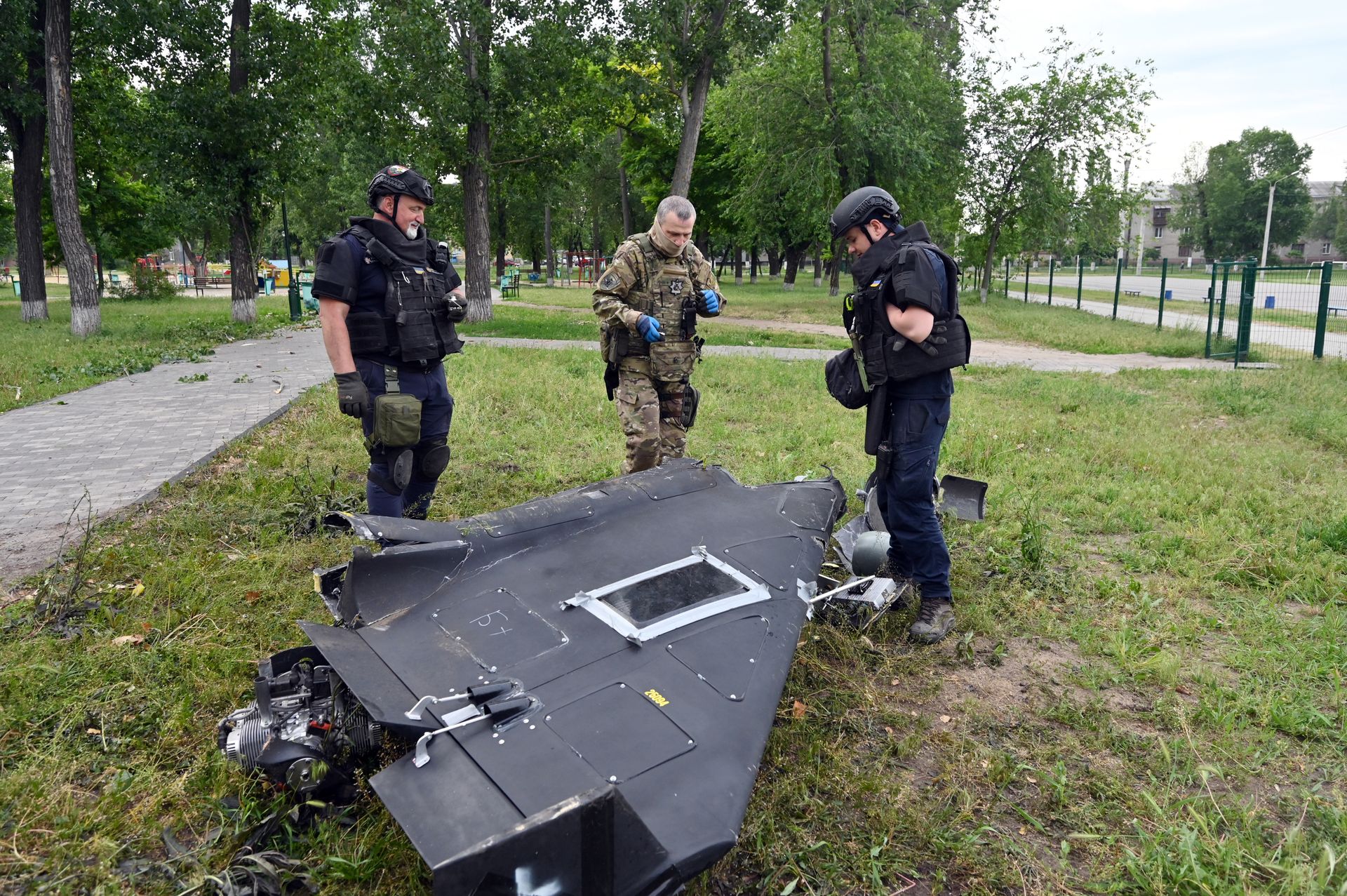
Russian forces are using LTE mobile networks and Ukrainian SIM cards to remotely control FPV drones, Serhii Beskrestnov, adviser to Defense Minister Mykhailo Fedorov, said.
Russian forces are using LTE mobile networks and Ukrainian SIM cards to remotely control FPV drones, according to Beskrestnov.
Switching off cards that roam fast (travel across multiple base stations in a row) would stop the carrier drone, but the carrier is not using a SIM card. Beskrestnov is speaking of FPV drones (electric quadcopters) dropped from the carrier. These don’t roam between cells (they are short range) - they hit targets locally like guided bombs.
For me the question arises: can a cell phone base station measure Doppler shift for an individual client, and switch it off basing on the result? Likely not in their default configuration, and software development would take time. Hardware development would take a lot of time. And this would mean that using LTE data in a car becomes impossible, because FPV drones and cars share the same speed range.
Background: “Flash” was a radio amateur with considerable experience before he became adviser to the defense ministry. He gets stuff wrong very rarely, and usually comments after seeing evidence (they analyze drone wreckage on a daily basis).
For me the question arises: can a cell phone base station measure Doppler shift for an individual client, and switch it off basing on the result?
I believe so. Cell tower triangulation via travel-time and signal strength is an existing, already proven method to get very general location data from cellular devices, just using that over a few samples would get you approximate speed data and likely be sufficient.
How fast is too fast? A loaded FPV drone with a sim card doesn’t move any faster than your average car. I’m sure they’re already doing something about cards moving at 200+ km/h
Ehhh…I mean, if the things have a GPS receiver, which I assume that they do, they can probably be configured to move to a given location and then only then flip on the cell radio to act as a relay.
EDIT: Honestly, I’m kind of surprised that someone hasn’t tried a drone that can deploy, say hydrogen or helium balloons with a relay radio hanging from them. It’s gotta be a complete pain in the ass to try to shoot balloons down, as they’re cheap, and they probably linger in an area long enough to permit for operations using them as a relay on an extended basis. They can also probably get a lot higher than a comparable drone, if that’s desirable.
EDIT: Honestly, I’m kind of surprised that someone hasn’t tried a drone that can deploy, say hydrogen or helium balloons
Balloons have already been tried, deploying them from drones is a pain so they’re mostly ground based. Russians are currently doing that to compensate for starlink losses
edit: look up Barrage-1, that’s their current 5G balloon testbed
Ah, gotcha, thanks. It looks like that’s a larger and more elaborate than what I was thinking of, with a ballast system and limited maneuverability. considers I dunno what the cost impact is.
However, the Barrage-1’s comparatively low altitudes could make them targets for Ukrainian air defense systems and other countermeasures.
“And what’s most important for us? To have the means that can detect such objects over our territory,” Beskrestnov suggested. “And to have the ability to shoot down such targets if they pose a threat. As far as I remember, the S-300 [surface to air missile system] can engage targets at an altitude of 20-30 km (about 12 to 19 miles).”
If it’s expensive enough, then using S-300s or comparable systems becomes economical.


That’s a lie most probably. Switching off cards that move too fast would be enough. They just look for excuses to link SIMs to real names.
Please pay attention to this detail:
Switching off cards that roam fast (travel across multiple base stations in a row) would stop the carrier drone, but the carrier is not using a SIM card. Beskrestnov is speaking of FPV drones (electric quadcopters) dropped from the carrier. These don’t roam between cells (they are short range) - they hit targets locally like guided bombs.
For me the question arises: can a cell phone base station measure Doppler shift for an individual client, and switch it off basing on the result? Likely not in their default configuration, and software development would take time. Hardware development would take a lot of time. And this would mean that using LTE data in a car becomes impossible, because FPV drones and cars share the same speed range.
Background: “Flash” was a radio amateur with considerable experience before he became adviser to the defense ministry. He gets stuff wrong very rarely, and usually comments after seeing evidence (they analyze drone wreckage on a daily basis).
I believe so. Cell tower triangulation via travel-time and signal strength is an existing, already proven method to get very general location data from cellular devices, just using that over a few samples would get you approximate speed data and likely be sufficient.
How fast is too fast? A loaded FPV drone with a sim card doesn’t move any faster than your average car. I’m sure they’re already doing something about cards moving at 200+ km/h
Ehhh…I mean, if the things have a GPS receiver, which I assume that they do, they can probably be configured to move to a given location and then only then flip on the cell radio to act as a relay.
EDIT: Honestly, I’m kind of surprised that someone hasn’t tried a drone that can deploy, say hydrogen or helium balloons with a relay radio hanging from them. It’s gotta be a complete pain in the ass to try to shoot balloons down, as they’re cheap, and they probably linger in an area long enough to permit for operations using them as a relay on an extended basis. They can also probably get a lot higher than a comparable drone, if that’s desirable.
Balloons have already been tried, deploying them from drones is a pain so they’re mostly ground based. Russians are currently doing that to compensate for starlink losses
edit: look up Barrage-1, that’s their current 5G balloon testbed
https://www.twz.com/news-features/russia-eyes-balloon-communications-system-to-fill-massive-gap-left-after-losing-starlink
Ah, gotcha, thanks. It looks like that’s a larger and more elaborate than what I was thinking of, with a ballast system and limited maneuverability. considers I dunno what the cost impact is.
If it’s expensive enough, then using S-300s or comparable systems becomes economical.
That would also affect their own operations tho
Their own operations could be filtered out by a simple allowlist…