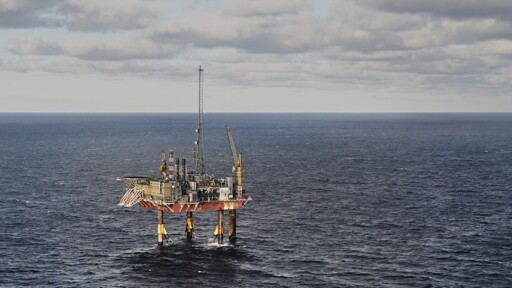
INEOS plans to transform the Nini oil field in the North Sea into a carbon storage site. The company aims to inject liquefied CO2 into depleted oil reservoirs beneath the seabed.
I get what you’re saying, it sounds very reasonable conceptually. But the problem is that this is a chain so riddled with weak links it’s infeasible
You’re right about biofuel… Except that biofuel is already refined biomass. The water is already removed, usually to become as close to pure hydrocarbons as possible. That’s a far more efficient CO2 sink than pure CO2, because the oxygen component is in the atmosphere
It’s insane to burn biofuels to lower atmospheric CO2.
And as far as the process being non-destructive… This technology was developed to use pressured CO2 to break smaller pockets in the rock, it’s like using a pressure chamber to deflate foam. Except the rocks aren’t plastic until your get a whole lot deeper, and the amount of pressure means the whole well is being pressurized beyond a level it was ever at naturally
Can a big cavity in the Earth store gasses? Sure. Can an oil well? Maybe… But so far, the answer is it leaks
As for your last point… If you instead ask if we should cram biofuels in the ground? That’s a way better idea, there’s something to it. It’s not a solution, it doesn’t scale to the levels where we can keep using fossil fuels everywhere, but it would sequester C02 very effectively. Kind of like it was before we dug it up and burned it
You’re right about biofuel… Except that biofuel is already refined biomass. The water is already removed, usually to become as close to pure hydrocarbons as possible.
Hydrocarbons.
Chains of hydrogen and carbon.
Your comment demonstrates you’re not fully understanding the chemistry of the combustion. If you remove the “water” I am talking about, you wouldn’t have a hydrocarbon. You would have only carbon.
The “water” I am talking about is the “hydro” part of the “hydrocarbon”. That “hydro” does not become CO2 when it burns. That “hydro” becomes H2O.
When burning lighter hydrocarbons, the majority of the exhaust in the stack is actually water vapor rather than CO2. Putting that hydrogen into the ground, unburnt, provides no additional benefit over putting just the CO2 into the ground. It merely fills up the reservoir faster, and requires even more energy for the same amount of carbon sequestration. Burning that biomass, it is (theoretically) possible for the energy recovered (after powering sequestration operations) to be a net positive.
Sequestering the unburned biofuel without recovering that energy, the operation must be a net negative.
Yes, hydrogen, the smaller possible molecule, and carbon, which is smaller and lighter then oxygen
Hydrocsrbon chains are the most efficient way to store carbon, aside from something like graphite.
Who cares what it becomes when you burn it? CO2 is obviously not the optimal carbon sink, even before you start considering things like long term stability
Hydrocsrbon chains are the most efficient way to store carbo
Volumetric efficiency is not the relevant metric. Energy efficiency is much more important. The process you describe requires far greater energy input to complete the sequestration.
Furthermore, the physical properties are a problem. Biomass appropriate to this process is conveyed as a flammable, pelletized solid; CO2 is an inert fluid. One of these can be pumped via pipeline into empty subterranean reservoirs; the other cannot.
Of course volumetric density is what matters. That and long term stability
You know what is really good at storing carbon underground forever? Fossil fuels. And if they can pull it out of the ground, they should have no problem putting it back in… It’s a lot simpler
Sequestering a fluid is far simpler, safer, and more stable than attempting the same with a solid.
Your arguments seem to assume that what you’re putting back into the ground is a fluid of some sort, either oil or gas.
Biomass is not typically handled as a fluid. Biomass is generally a solid. Picture “wood mulch”, or “corn stalks”. While the specific materials will vary, the most common format for these biofuels is as a pelletized commodity: The source material is physically pressed into small lumps and handled like coal, not oil or gas.
Conveying liquified CO2 through a pipe and into a reservoir is a trivial exercise. Conveying pelletized biomass into a suitable storage facility in quantities necessary to have a practical effect is not feasible.
What methods are you using to convert pelletized biomass into liquid hydrocarbons, suitable for pumping back into the ground? How is that method superior to pumping compressed CO2 instead?
You keep jumping back and forth between biofuel and biomass. You can bury solid biofuel, you can pump liquid biofuel, both are stable if you put them somewhere without much oxygen
Biomass is something different… Do it right and you can just use it as fertilizer. Just grow a bunch of algae and spray it over dry land… It’s that easy. It’ll feed the soil, which locks up a lot of carbon back into the food chain. Stack wood in a desert, who cares. There’s so many better ways to do this
And CO2 is a fucking gas. Yes, it’s liquid under pressure or at low enough temp… But it does not stay that way! We live in Earth, and most cavities aren’t able to stay pressurized without leaking
Biomass is something different… Do it right and you can just use it as fertilizer. Just grow a bunch of algae and spray it over dry land… It’s that easy. It’ll feed the soil, which locks up a lot of carbon back into the food chain. Stack wood in a desert, who cares. There’s so many better ways to do this
You fail to comprehend the concept or need for “sequestering”. What you are talking about perpetuates the atmospheric carbon cycle. It does not decrease atmospheric carbon dioxide. The mass biodegrades, re-releasing the carbon. “Sequestration” locks that carbon out of the biosphere. You are not talking about sequestration.
You keep jumping back and forth between biofuel and biomass.
Biomass is the raw substance. Biofuel is processed biomass. Processing it into a solid fuel is relatively trivial by little more than compressing it under relatively low pressure. Processing into liquid fuels is far more complicated and energy intensive than CO2 capture after combustion. For sequestration purposes, biomass would not be processed into liquid fuel. Liquid biofuels would only be used for transportation purposes.
And CO2 is a fucking gas
Not at the depths and pressures we’re talking about.
But it does not stay that way! We live in Earth, and most cavities aren’t able to stay pressurized without leaking
I think you need to revisit that misconception. The cavities we’re talking about certainly are.
You can bury solid biofuel,
Not in the volumes necessary for atmospheric carbon capture, no, we cannot. Furthermore, solid biofuels are not stable, certainly not as stable as CO2.


I get what you’re saying, it sounds very reasonable conceptually. But the problem is that this is a chain so riddled with weak links it’s infeasible
You’re right about biofuel… Except that biofuel is already refined biomass. The water is already removed, usually to become as close to pure hydrocarbons as possible. That’s a far more efficient CO2 sink than pure CO2, because the oxygen component is in the atmosphere
It’s insane to burn biofuels to lower atmospheric CO2.
And as far as the process being non-destructive… This technology was developed to use pressured CO2 to break smaller pockets in the rock, it’s like using a pressure chamber to deflate foam. Except the rocks aren’t plastic until your get a whole lot deeper, and the amount of pressure means the whole well is being pressurized beyond a level it was ever at naturally
Can a big cavity in the Earth store gasses? Sure. Can an oil well? Maybe… But so far, the answer is it leaks
As for your last point… If you instead ask if we should cram biofuels in the ground? That’s a way better idea, there’s something to it. It’s not a solution, it doesn’t scale to the levels where we can keep using fossil fuels everywhere, but it would sequester C02 very effectively. Kind of like it was before we dug it up and burned it
Hydrocarbons.
Chains of hydrogen and carbon.
Your comment demonstrates you’re not fully understanding the chemistry of the combustion. If you remove the “water” I am talking about, you wouldn’t have a hydrocarbon. You would have only carbon.
The “water” I am talking about is the “hydro” part of the “hydrocarbon”. That “hydro” does not become CO2 when it burns. That “hydro” becomes H2O.
When burning lighter hydrocarbons, the majority of the exhaust in the stack is actually water vapor rather than CO2. Putting that hydrogen into the ground, unburnt, provides no additional benefit over putting just the CO2 into the ground. It merely fills up the reservoir faster, and requires even more energy for the same amount of carbon sequestration. Burning that biomass, it is (theoretically) possible for the energy recovered (after powering sequestration operations) to be a net positive.
Sequestering the unburned biofuel without recovering that energy, the operation must be a net negative.
Yes, hydrogen, the smaller possible molecule, and carbon, which is smaller and lighter then oxygen
Hydrocsrbon chains are the most efficient way to store carbon, aside from something like graphite.
Who cares what it becomes when you burn it? CO2 is obviously not the optimal carbon sink, even before you start considering things like long term stability
Volumetric efficiency is not the relevant metric. Energy efficiency is much more important. The process you describe requires far greater energy input to complete the sequestration.
Furthermore, the physical properties are a problem. Biomass appropriate to this process is conveyed as a flammable, pelletized solid; CO2 is an inert fluid. One of these can be pumped via pipeline into empty subterranean reservoirs; the other cannot.
Do you work for them or something? Holy shit
Of course volumetric density is what matters. That and long term stability
You know what is really good at storing carbon underground forever? Fossil fuels. And if they can pull it out of the ground, they should have no problem putting it back in… It’s a lot simpler
Sequestering a fluid is far simpler, safer, and more stable than attempting the same with a solid.
Your arguments seem to assume that what you’re putting back into the ground is a fluid of some sort, either oil or gas.
Biomass is not typically handled as a fluid. Biomass is generally a solid. Picture “wood mulch”, or “corn stalks”. While the specific materials will vary, the most common format for these biofuels is as a pelletized commodity: The source material is physically pressed into small lumps and handled like coal, not oil or gas.
Conveying liquified CO2 through a pipe and into a reservoir is a trivial exercise. Conveying pelletized biomass into a suitable storage facility in quantities necessary to have a practical effect is not feasible.
What methods are you using to convert pelletized biomass into liquid hydrocarbons, suitable for pumping back into the ground? How is that method superior to pumping compressed CO2 instead?
You keep jumping back and forth between biofuel and biomass. You can bury solid biofuel, you can pump liquid biofuel, both are stable if you put them somewhere without much oxygen
Biomass is something different… Do it right and you can just use it as fertilizer. Just grow a bunch of algae and spray it over dry land… It’s that easy. It’ll feed the soil, which locks up a lot of carbon back into the food chain. Stack wood in a desert, who cares. There’s so many better ways to do this
And CO2 is a fucking gas. Yes, it’s liquid under pressure or at low enough temp… But it does not stay that way! We live in Earth, and most cavities aren’t able to stay pressurized without leaking
You fail to comprehend the concept or need for “sequestering”. What you are talking about perpetuates the atmospheric carbon cycle. It does not decrease atmospheric carbon dioxide. The mass biodegrades, re-releasing the carbon. “Sequestration” locks that carbon out of the biosphere. You are not talking about sequestration.
Biomass is the raw substance. Biofuel is processed biomass. Processing it into a solid fuel is relatively trivial by little more than compressing it under relatively low pressure. Processing into liquid fuels is far more complicated and energy intensive than CO2 capture after combustion. For sequestration purposes, biomass would not be processed into liquid fuel. Liquid biofuels would only be used for transportation purposes.
Not at the depths and pressures we’re talking about.
I think you need to revisit that misconception. The cavities we’re talking about certainly are.
Not in the volumes necessary for atmospheric carbon capture, no, we cannot. Furthermore, solid biofuels are not stable, certainly not as stable as CO2.
At this point, you just seem obscenely delusional to me. What you’re saying is so far beyond reason I don’t even know where to start.
You are not informed enough to have an opinion on the topic. I’m sorry, you’re just spewing nonsense, you need to keep your opinions to yourself