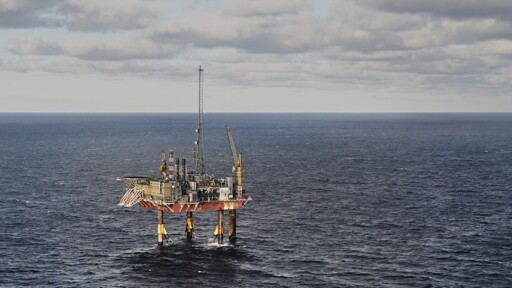
INEOS plans to transform the Nini oil field in the North Sea into a carbon storage site. The company aims to inject liquefied CO2 into depleted oil reservoirs beneath the seabed.
You keep jumping back and forth between biofuel and biomass. You can bury solid biofuel, you can pump liquid biofuel, both are stable if you put them somewhere without much oxygen
Biomass is something different… Do it right and you can just use it as fertilizer. Just grow a bunch of algae and spray it over dry land… It’s that easy. It’ll feed the soil, which locks up a lot of carbon back into the food chain. Stack wood in a desert, who cares. There’s so many better ways to do this
And CO2 is a fucking gas. Yes, it’s liquid under pressure or at low enough temp… But it does not stay that way! We live in Earth, and most cavities aren’t able to stay pressurized without leaking
Biomass is something different… Do it right and you can just use it as fertilizer. Just grow a bunch of algae and spray it over dry land… It’s that easy. It’ll feed the soil, which locks up a lot of carbon back into the food chain. Stack wood in a desert, who cares. There’s so many better ways to do this
You fail to comprehend the concept or need for “sequestering”. What you are talking about perpetuates the atmospheric carbon cycle. It does not decrease atmospheric carbon dioxide. The mass biodegrades, re-releasing the carbon. “Sequestration” locks that carbon out of the biosphere. You are not talking about sequestration.
You keep jumping back and forth between biofuel and biomass.
Biomass is the raw substance. Biofuel is processed biomass. Processing it into a solid fuel is relatively trivial by little more than compressing it under relatively low pressure. Processing into liquid fuels is far more complicated and energy intensive than CO2 capture after combustion. For sequestration purposes, biomass would not be processed into liquid fuel. Liquid biofuels would only be used for transportation purposes.
And CO2 is a fucking gas
Not at the depths and pressures we’re talking about.
But it does not stay that way! We live in Earth, and most cavities aren’t able to stay pressurized without leaking
I think you need to revisit that misconception. The cavities we’re talking about certainly are.
You can bury solid biofuel,
Not in the volumes necessary for atmospheric carbon capture, no, we cannot. Furthermore, solid biofuels are not stable, certainly not as stable as CO2.
At this point, you just seem obscenely delusional to me.
This does not surprise me. I mean, you suggested spraying carbon-rich “fertilizer” within the biosphere as a valid approach toward reducing atmospheric carbon.
Your basic understanding of the concept of “sequestration” is irreparably flawed.


You keep jumping back and forth between biofuel and biomass. You can bury solid biofuel, you can pump liquid biofuel, both are stable if you put them somewhere without much oxygen
Biomass is something different… Do it right and you can just use it as fertilizer. Just grow a bunch of algae and spray it over dry land… It’s that easy. It’ll feed the soil, which locks up a lot of carbon back into the food chain. Stack wood in a desert, who cares. There’s so many better ways to do this
And CO2 is a fucking gas. Yes, it’s liquid under pressure or at low enough temp… But it does not stay that way! We live in Earth, and most cavities aren’t able to stay pressurized without leaking
You fail to comprehend the concept or need for “sequestering”. What you are talking about perpetuates the atmospheric carbon cycle. It does not decrease atmospheric carbon dioxide. The mass biodegrades, re-releasing the carbon. “Sequestration” locks that carbon out of the biosphere. You are not talking about sequestration.
Biomass is the raw substance. Biofuel is processed biomass. Processing it into a solid fuel is relatively trivial by little more than compressing it under relatively low pressure. Processing into liquid fuels is far more complicated and energy intensive than CO2 capture after combustion. For sequestration purposes, biomass would not be processed into liquid fuel. Liquid biofuels would only be used for transportation purposes.
Not at the depths and pressures we’re talking about.
I think you need to revisit that misconception. The cavities we’re talking about certainly are.
Not in the volumes necessary for atmospheric carbon capture, no, we cannot. Furthermore, solid biofuels are not stable, certainly not as stable as CO2.
At this point, you just seem obscenely delusional to me. What you’re saying is so far beyond reason I don’t even know where to start.
You are not informed enough to have an opinion on the topic. I’m sorry, you’re just spewing nonsense, you need to keep your opinions to yourself
This does not surprise me. I mean, you suggested spraying carbon-rich “fertilizer” within the biosphere as a valid approach toward reducing atmospheric carbon.
Your basic understanding of the concept of “sequestration” is irreparably flawed.