

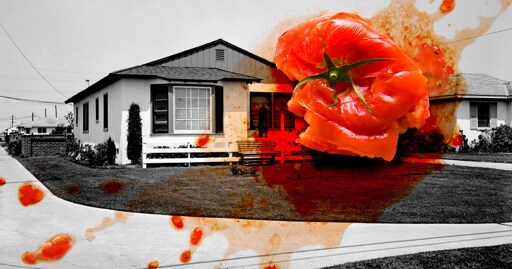
In 2013, Nicole and Dan Virgil lived in a lush, affluent suburb of Chicago. Dan had a good job. Nicole home-schooled their two kids.
Nicole decided to plant her own garden. She and her husband Dan, an engineer, don’t do things by half-measures. They watched YouTube videos on gardening, checked books out of the library and drew up plans. They built a raised bed and dug a wicking reservoir under it lined to store stormwater and drain the swampy, clay soils. They experimented with two plots. They dropped seeds directly into the spaded-up lawn and other seeds into a fertilized raised bed. Most seeds rotted in the clay soils of the lawn. Those that germinated did not thrive in the nutrient-poor earth, but the seeds in the raised bed sprang up in a few days and thrived, producing in coming months vegetables of deep vibrant colors that were delicious.
Autumn comes swiftly to Chicagoland. The Virgils hated to stop gardening. On the web, Nicole noticed farmers in Maine extended the growing season with long, plastic tunnels called hoop houses. You can buy hoop house kits for a couple of hundred dollars, but the Virgils are DIY people. Dan drew up plans for a wood frame connected with PVC pipes. He shored up the supports so the tunnel could withstand 80 mph winds and heavy snow loads. He carefully calculated the height and width of the tunnel to maximize the buildup of passive solar heating inside. They located the hoop house in the middle of the backyard, so it was not visible from the street.
The one thing the Virgils did not think about was the city’s zoning board. Dan and Nicole had lived in Elmhurst for several decades. Elmhurst is a town of squat, white-trimmed, yellow-brick ranch houses placed in the center of spacious lots like iced pastries on a tray. Green lawns frame the houses. The lawns are largely unfenced, rolling along block after block, connecting one neighbor to another, a green communal thread. The Virgils saw neighbors build hockey rinks in their front yards and assemble trampolines and outdoor living rooms in their backyards. They figured the hoop house fell in the same category of a temporary recreational structure. They didn’t count on one neighbor calling the city, asking if the hoop house needed a permit.
One day, they came home to find a Property Maintenance Violation Notice on their front door. The city required a permit for their “greenhouse.” The Virgils stopped building. Dan went down to City Hall and explained their goal—to extend the growing season for a few months. They were not building a greenhouse. They’d take the hoop house down in the spring. He came away with the understanding that as long as the tunnel was temporary, it was ok, like the skating rinks and summer cabanas.
For anyone who isn’t in a position to grow their own food and also has this question, look into Community Supported Agriculture (CSA). At the start of the year, you buy a share in a local farm, and you get a box of veggies every week of the growing season. [There are variations: you can get a large box or a small box, you can choose to get a box just on alternate weeks, etc.] By having their money up front, the farmer is no longer at the mercy of start-of-season bank loans and the risk of a bad harvest: the farm is guaranteed to survive to the following year. In exchange, you get a box of peak produce: no lettuce that’s been making it’s way through distributors for three weeks, or apples that have been warehoused for nine months. No food that’s traveled halfway across the world - everything is small scale, seasonal, and incredibly fresh.
This isn’t always just limited to produce either! Several CSA farms near me do livestock as well, from chicken to lamb to venison and everything else.
Oh! I had a local mushroom CSA once - it was so good, but I just couldn’t keep up with the mushrooms! I’ve opted into their holiday shares instead :)
We also had a place called Lost Bread Company. They bought a small mill and then were like, “Well, what do we do with this?!” They eventually built up a network of people who were growing various “older” grains on hobby farms or odd bits of land - grains that just aren’t in everyday use these days like spelt, emmer, etc - and they ground their grain for them. But then they were like, “Wait, what do we do with the grain?!” So they started a bakery - and a CSA.
Every month, you got a box focused on the grain of the month. There was a little booklet going over the history of the grain, it’s various traits and uses, and then several tested recipes for what you could do with the grain in it’s various forms. The box would also contain the grain in it’s flour form, the grain in it’s whole-grain or partially hulled form if appropriate (so you might get rolled oats or wheatberries or something), a range of baked goods made from the grain, and usually something else associated with the grain - you might get buckwheat honey, for example, or a small decorative sheaf in October or November. It was a really cool concept, and I really enjoyed it. They eventually backed off the CSA - it was too much work for them - and focused on their hobby mill and bakery. They make these absolutely killer pretzel shortbreads …
CSAs are awesome. Unfortunately they can often be expensive for people who are struggling financially, but if you can join one I would.
They can be expensive, yeah. I’m currently paying $400 for a ten-week share, which used to make me wince when I wrote out the check - $40 a week for veggies? What was I thinking?! And then I put it into context. The food in those boxes filled 80% of my veggie needs for the entire year, plus most of the herbs I use. 80% of a 52-week year is a bit over 41 weeks - and ten dollars a week for a bunch of incredibly fresh produce is a bargain.
One thing I’d suggest, for people who might be interested in CSAs but can’t afford them is to check with all your local CSA farms, as some farms have other options available. Some farms offer work-shares: you agree to work for the farm (it’s usually about 4 hours a week), and you get a free share. Another farm I belonged to offered a distribution-share: a small truck would drop off shares for local people at your place - in front of your garage, or on your porch, or some other agreeable location - and over the next few hours people would come by to pick up their shares. In exchange for hosting the boxes, you got a free share for your family. There are miscellaneous variations on this, and they’re generally offered only by a minority of farms, but they are out there.
My parents have belonged to one of those for years. One of the cool things about theirs is their farm usually grows much different varieties of vegetables than you can find in regular grocery stores. They regularly get white and purple carrots, and some variety of orange carrot that has a little bit of a peppery/gingery bite to it. One year they got some heirloom variety of celery which had too much flavor eat raw. Imagine biting into a stick of celery and being physically overwhelmed by the amount of celery flavor you’re experiencing, like, “Jesus Christ… the celery… too… powerful…” It was absolutely killer in soups though.
You have cool parents null
I’ve belonged to a few different ones (moved a couple times, one wasn’t a great fit, and one farmer retired during the pandemic), and there’s always something new. Not just heirloom tomatoes and different types of hot peppers, but odd varieties of herbs (lemon basil is fantastic!), odd fruits like paw paws, ground cherries and incredibly fresh Asian pears, weird upscale vegetables that you usually only get at higher priced restaurants and groceries, etc.
Between my boxed farm share and the pick your own extras that come with it, it’s probably about 80% of my veggies for the entire year.